What is fascia and why do we work with it?
MER massage (Myofascial Energetic Release) is much more than just kneading muscles. At its heart lies the fascia, or connective tissue — a three-dimensional web that wraps around every muscle, bone, nerve, and organ in your body. Fascia is like an inner suit of armour that gives your body its shape and supports your posture.
Yet, fascia has another, lesser-known quality. It is incredibly sensitive to environment, movement, and stress. When you experience prolonged physical or emotional tension, the fascia thickens, dehydrates, and loses its elasticity. This creates stiffness and pain in the body, restricting your natural freedom of movement.
How the tissue protects us
Connective tissue often acts as a buffer against trauma and stress. This means that the tension you feel on a daily basis — whether from long hours sitting at a desk, emotional trauma, or symptoms of burnout — does not just live in your mind. It is physically stored in your body's connective tissue.
Fascia does not respond to quick, forceful kneading. If we try to "break it open" too quickly, the tissue contracts even further to protect itself. That is why releasing the fascia requires a very specific approach:
- The touch must be exceptionally slow
- The pressure is deep yet melting, waiting for the tissue to yield
- Collaboration with your conscious breathing is essential
As the connective tissue begins to rehydrate and stretch, the body's natural elasticity is restored, easing pressure on nerves and blood vessels.
The deep body-mind connection
The body and mind are not separate machines. Everything you experience emotionally is reflected in your physiology. Somatic therapy and MER massage are based on the understanding that chronic muscle tension is often linked to held emotions or defensive reactions.
Have you noticed how fear makes us shrug our shoulders up to our ears? How anger tightens the jaw and the chest? Or how deep sadness makes our breathing shallow, just to avoid feeling the pain? These are natural reactions. But when stress is prolonged, the body forgets how to switch back into a state of safety.
Releasing emotions through bodywork
During an MER massage, we do not diagnose or try to "cure" illnesses. Instead, we support the body's natural healing process. Through slow, conscious pressure, we help your body understand that the danger has passed and that it is safe to let go of old protective armour.
Often, as the tense tissue begins to release, emotions rise to the surface. This can show up as:
- Deep sighs and yawning
- Waves of heat or cold passing through the body
- Sudden laughter or tears
- Releasing body tremors
This is a beautiful and natural part of the process. Linda's 10+ years of practice in body psychotherapy means that you are supported at every moment, no matter what feelings arise. Your only task is to allow them to flow.
How it differs from regular massage
Many people who have tried traditional forms of massage are used to certain expectations: a fast pace, lots of oil, and vigorous rubbing. MER massage, however, is in many ways the opposite experience.
In order for the touch to grip the fascia and stretch it deeply rather than just gliding over the connective tissue, very little oil or wax is used. This achieves the right contact with the skin, allowing us to work deep into tissue patterns without sliding on the surface.
Comparison: Classical vs MER
| Feature | Classical massage | MER massage |
|---|---|---|
| Goal | Improving muscle circulation | Releasing fascia and opening deep patterns |
| Pace | Dynamic, often rhythmic and faster | Extremely slow, pausing, waiting |
| Nature of touch | Rubbing, kneading, gliding | Melting, stretching, listening to the depths of the tissue |
| Client's role | Passive recipient | Active participant (through breath and presence) |
| Result | Short-term relaxation | Supports long-term postural and emotional release |
This doesn't mean one is better than the other — it is simply a question of what your body needs right now. If you want a quick recovery after a workout, a sports massage is an excellent choice. But if you are looking for a way to relieve chronic tension and restore contact with your body, MER massage is a deeply supportive alternative.
Who this approach is for
I see clients of many different ages and stages of life. Most often, people find their way to MER massage when they feel that regular solutions are no longer working. You might have tried stretching, physiotherapy, or traditional massage, only for the tension in your shoulders or back to return a few days later.
Deep bodywork is particularly suited to those who:
- Are experiencing emotional exhaustion. Stress and anxiety do not just live in our minds; they constrict our chests and make our breathing shallow. MER supports tension release on a bodily level, which often brings relief to the mind as well.
- Work for long hours in fixed postures. Spending long hours at a computer glues our connective tissue into unnatural positions. Releasing the fascia helps restore posture from the inside out.
- Are going through major life transitions. Loss, divorce, or a career change can put the body on the defensive. Safe, non-judgmental touch creates space to find a new balance.
- Desire deeper self-development. Many clients use massage as regular self-care to maintain a conscious connection with their body.
When to seek other solutions?
Since Linda Pukk is a therapist and not a doctor, we do not deal with medical diagnoses or cure illnesses. If you have an acute injury (a fracture, a fresh muscle tear), severe inflammation in the body, or a fever, please consult your doctor first and come to bodywork once the acute phase has passed.
What a session actually looks like
Our entire session is designed to be your personal time and space. Stepping into my therapy space at Tina 5/1, we leave the rush at the door. Each session is tailored to what your body needs on that particular day.
1. Initial presence: We always start with a brief attunement. We talk through your needs, look at your breathing patterns and posture. There is no need to rush — this is a time for grounding.
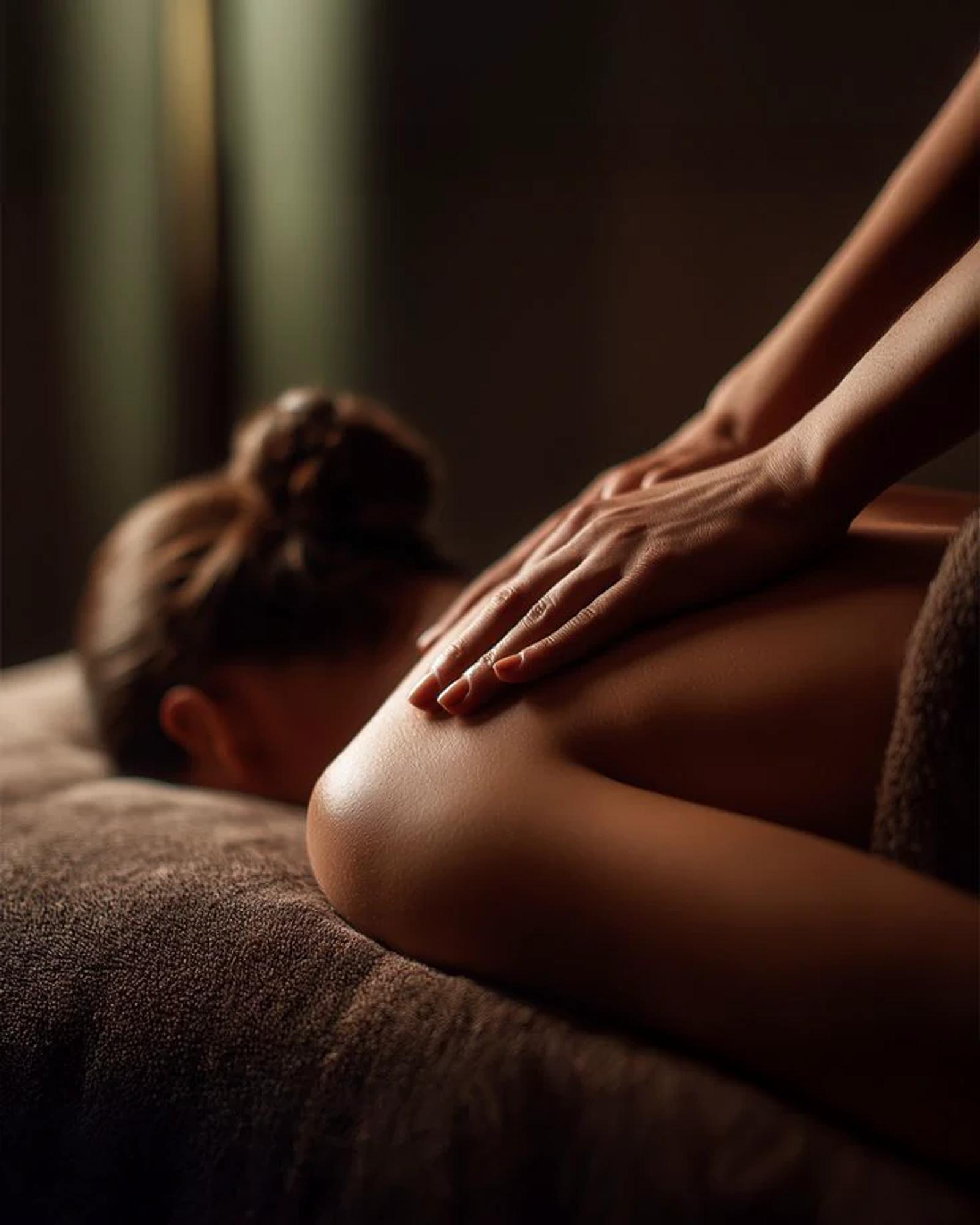
2. Deep work on the table: On the massage table, we work mainly on the problem areas, but always with the body's wholeness in mind. For example, chronic neck pain might actually originate from tension in the pelvis. I use slow, gradually deepening touch using fingers, knuckles, and even forearms, carefully listening to your body's response.
Breathing as your most important tool
During the session, I will often ask you to direct your breath straight into the source of tension. This helps activate the parasympathetic nervous system (rest-and-digest mode) and signals to the body that it is safe to let go. You are an active participant, not just a passive recipient.
3. Sweet pain vs sharp pain: When releasing fascia, we may encounter sensitive areas. Our goal is to find the zone known as "sweet pain" — a point where you feel intense pressure, but it feels right, relieving, and you can breathe through it. If the pain becomes sharp or causes your body to tense up, we back off. Your boundaries are always respected.
4. Closing: At the end of the session, there is plenty of time to lie in silence to integrate the experience.
A safe space and next steps
Bodywork is an intimate and deeply personal process. My goal is to offer a safe container where every emotion, tension, and reaction is welcome, without judgment or the need to immediately "fix" it.
From experience, I see that a conscious and slow approach supports each person's individual journey far better than rushed manipulations. Changes that unfold at their own pace tend to be lasting.
An investment in your wellbeing
Our clients in Tallinn appreciate the opportunity to find a gentler alternative to medical approaches. Sessions are paid (from 55€), but the good news is that at Välgatus Ruum you can also pay for services through the Stebby platform. This is a wonderful way to use your health allowance to support your long-term wellbeing.
If you feel your body longing for deeper listening, slowness, and support through tension-releasing touch, you are very welcome here.
Book an appointment through our online system, choose the 60-minute or 90-minute MER massage session that suits you, and let's meet on Tina Street. We will start right where you are and move forward at your own pace.