What is thanatotherapy and why do we need it?
Thanatotherapy in Tallinn offers you a unique opportunity to experience something we rarely allow ourselves in today's fast-paced world – a complete and genuine letting go. It is a profound branch of body psychotherapy that focuses on our fundamental human need to feel safe, and through this safety, to release chronic tension stored in the body.
Many people feel a slight chill when they hear the word "thanatotherapy", as it originates from the Greek word thanatos (death). However, this practice has absolutely nothing to do with anything dark or final in a physical sense. Instead, the name symbolises the therapy of letting go – a metaphorical death of old habits, ego control, and the exhausting effort to keep everything in life in check. Just as nature lets the leaves fall in autumn so that new life can emerge in spring, this therapy helps you let go of what no longer serves you.
Deeper than ordinary relaxation
In our daily lives, we seek relaxation in many ways – we get a massage, watch television, or drink a cup of tea. But often, this relaxation only reaches the physical or mental surface. Our subconscious and nervous system remain on high alert. Thanatotherapy takes your deep relaxation to an entirely new level. Rather than mechanically kneading muscles, we communicate directly with your nervous system.
The core pillars of this practice are:
- Zero demands – you do not have to do, achieve, or even relax "correctly" during the session
- Complete safety – Linda creates a supportive, non-judgemental space, which is essential for deep work
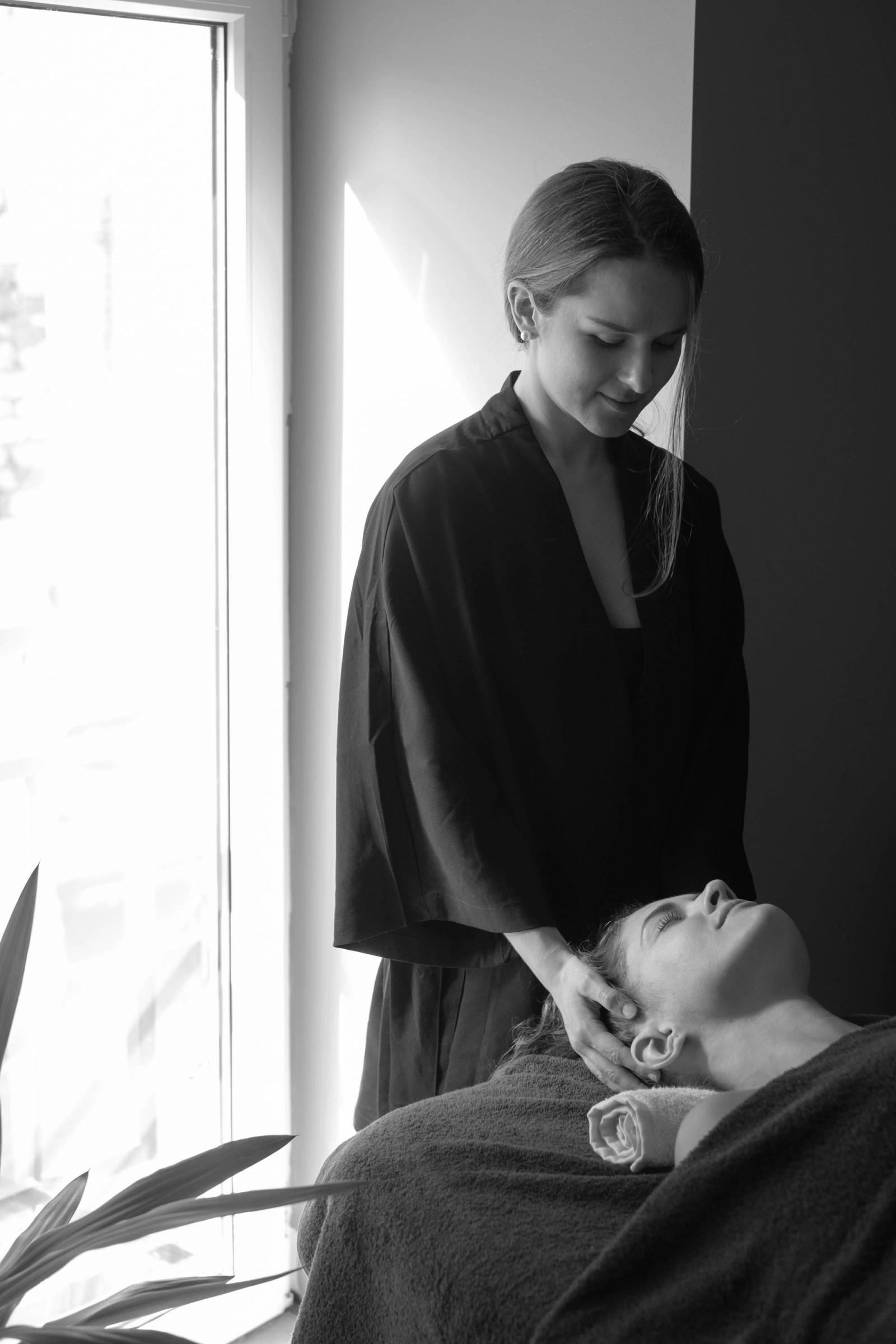
- Gentle contact – using highly specific static touch and micro-movements
- Respecting your inner pace – the process unfolds only as fast as your system is ready to open up
We live in a culture that values constant action and achievement. Thanatotherapy offers a radical alternative: a space where being is more valuable than doing. It supports your healing process through any life challenge simply by allowing you to let down all your defences for a moment.
Releasing control patterns: how the body remembers
Have you ever found yourself in a situation where your mind tells you it's time to rest, but your body refuses to relax? This is a classic sign that strong defence and control mechanisms are active in your system. Releasing control patterns is one of the most vital and healing aspects of thanatotherapy.
The stress, unexpected events, and emotional traumas we experience throughout life teach us that we are only safe when we control every detail. This mental control becomes physically stored in your body.
Body memory and the invisible armour
Every time you suppress an emotion, clench your jaw, pull your shoulders up to your ears, or hold your breath, you create physical armour. Over the years, this armour becomes so familiar that you no longer even notice it. Your nervous system remains stuck in a sympathetic (fight-or-flight) state.
Common physical manifestations of this chronic alertness include:
- Shallow breathing and a constant feeling that you can't fill your lungs with air
- Chronic tension in the neck, shoulders, and lower back that doesn't yield to standard stretching
- An inability to sit still quietly, a constant need to fidget or tap your foot
- Anxiety during moments that should be relaxing (such as falling asleep or being on holiday)
Linda’s approach helps the body gradually let go of this armour. When the therapist offers specific, grounded support to the body, the brain receives a signal: "It is safe here. Someone else is holding me. I can stop guarding." The moment the body truly understands that it no longer has to carry everything alone is often deeply emotional and profoundly liberating. Tears, sighs, or sudden laughter are all natural ways for the body to shed its old burdens.
Who is the therapy of letting go for?
While everyone can benefit from deep physical peace, there are certain life stages and conditions where the therapy of letting go can offer truly life-changing support. Often, people arrive at this practice after trying talking therapies; they understand their problems very well on a cognitive level, yet their bodies remain trapped in old stress patterns.
This is an excellent approach if you are a highly analytical, rational person who lives "in their head" and is constantly thinking. Thanatotherapy brings you out of your mind and back into your body.
Signs that your body is longing for deep relaxation
You may benefit greatly from thanatotherapy if your daily life is shaped by any of the following:
- You are on the verge of burnout or recovering from it, and need to restore your resources without any added pressure
- You suffer from chronic insomnia because your thoughts are racing and your body is too tense to fall asleep
- You have been diagnosed with an anxiety disorder and are looking for gentle, body-supportive alternatives to medical treatment
- You are going through deep grief, a breakup, or a major life transition, and need a safe space to "fall apart" and gather yourself back together
- You are used to always taking care of others and carry an overwhelming burden of daily responsibility
Who needs special consideration
By its nature, thanatotherapy is extremely gentle and safe, but it is important to note that the services at Välgatus Ruum are intended for adults. Minor clients (under 18 years of age) require written parental consent to participate in therapy.
Furthermore, if you are undergoing active psychiatric treatment or experiencing severe psychotic episodes, Linda always recommends consulting your treating doctor beforehand. Thanatotherapy does not replace psychiatric treatment; rather, it supports the healing process gently and holistically.
What to expect during a session on Tina Street?
For many, attending therapy for the first time is accompanied by anxiety – what will be done to me, will it hurt, will I know how to behave? At the Välgatus Ruum studio on Tina 5/1, in the heart of Tallinn, a warm, private, and peaceful environment awaits you, designed precisely so that any anxiety can be left at the door.
Each session typically lasts 75 minutes (with deeper 90-minute sessions also available) and is tailored to your current needs.
Creating a safe space and preparation
When you arrive, we always begin with a brief conversation. We do not rush into action. We will discuss what has brought you here today and how your body is feeling. Then, wearing comfortable clothes, you will lie down on a wide, soft mat on the floor. You can lie on your back, covered with a warm blanket, supported by pillows so that no joint feels any strain.
The practice – communication without words
Once the initial conversation is over, the room usually becomes quiet. At the core of the process are four key elements:
- Supporting grounding points: The therapist often begins at the extremities of the body – gently supporting the feet, ankles, or head. This gives the body a sense of its boundaries.
- Conscious pauses: Unlike a massage where the hands are constantly moving, Linda takes pauses. This waiting is an active creation of space, giving your nervous system time to respond.
- Micro-movements: If needed, very gentle rocking or stretching is used, mimicking maternal care and awakening early memories of safety.
- Presence: Throughout the session, the therapist's primary tool is her own grounded and peaceful presence, which acts as a mirror to your tense system.
When the session ends, there is no rushed getting up. We take our time to gently return, sit up, drink some water, and, if you wish, briefly reflect on the experiences that arose. This ensures you leave the Tina Street studio feeling fully present and integrated.
Common fears: myths and reality
Every lesser-known, deep practice comes with certain preconceptions. Because thanatotherapy works with control patterns and the subconscious, it is completely natural to feel some uncertainty before your first experience. Here, we debunk some of the most common myths that hold clients back.
Many fear that "letting go" means losing control in a way that is dangerous or humiliating. In reality, it is the exact opposite – we do not force open any doors that are not ready to be opened. Your body's inner wisdom always guides the process.
Comparison with other practices
To better understand the essence of thanatotherapy, it is often helpful to compare it with more traditional forms of bodywork:
| Feature | Ordinary classical massage | Thanatotherapy |
|---|---|---|
| Goal of the process | Mechanical relief of muscle tension | Deep relaxation of the nervous system and trust |
| Nature of touch | Strong, dynamic, moving, often painful | Very gentle, static, supportive, non-judgemental |
| Client's role | Passive recipient on a physical level | Deeply engaged in their own inner process |
| Clothing | Undressed, working with oils | Fully clothed, in comfortable clothing |
| Duration and focus | Focuses on the symptom (e.g. a painful back) | Focuses on the whole person and basic safety |
Fear of the name and unexpected emotions
As mentioned earlier, the name thanatos is often the first obstacle. But think of it this way: every time you fall into a deep, restorative sleep, you experience a small, symbolic letting go of the day's worries and your identity. Thanatotherapy is simply a conscious, supported extension of this everyday, healthy release.
Another frequent fear is: "What if I start crying or cannot control my emotions?" In this space, every emotion is welcome. If tears come, they cleanse. If sleep comes, it heals. Linda places no expectations on your reactions, providing a strong, neutral container for all of your experiences.
Integration and the journey after the session
Thanatotherapy does not end the moment you close the therapy space door behind you. This deep relaxation and nervous system regulation initiate processes in the body that continue for days. This is known as the integration period, a natural and crucial part of the therapy.
Because we have worked with deep layers of tension, the body needs time to adjust to a new, more relaxed way of being. It is completely normal to experience things slightly differently after your first session.
After-effects of the session and how to support them
Following a therapy of letting go session, you may notice several changes:
- Deep peace and quiet – a sensation as if the pace inside you has slowed down
- Improved sleep quality – many clients report the deepest, most restorative sleep of their lives on the very same night
- Enhanced body awareness – during the day, you will begin to notice when you tense your shoulders or hold your breath
- Emotional sensitivity – for a couple of days, you might feel more open or vulnerable than usual, which is a sign that your defences have softened
We recommend setting aside some quiet time for yourself after the session. Drink plenty of water and allow yourself to rest if needed. Every person's journey is unique – some find immediate relief from anxiety, while others discover new depths within themselves, layer by layer.
If you wish to begin this journey and truly support your body, you are warmly welcome to book a session at Välgatus Ruum. To make looking after your mental and physical health even easier, payments can also be made through the Stebby platform. Find a suitable time in the Timma booking system and take a step towards deeper inner peace.